A Warehouse Address Is Not a Warranty: Decoding 'Ships From the U.S.' on Zhejiang Orders
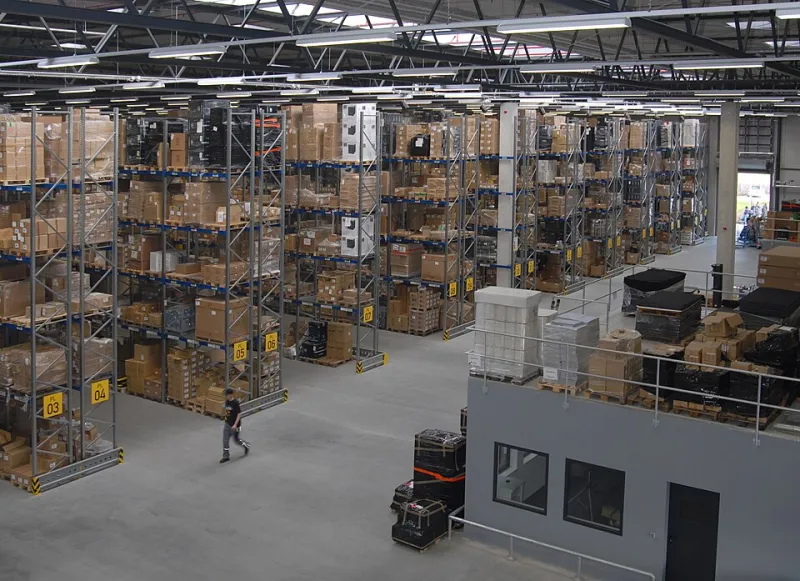
Photo: Adamhallgmbh, CC BY-SA 3.0 de, via Wikimedia Commons
There is a little phrase that has quietly become one of the most reassuring things on a product page: ships from the U.S. For anyone who has spent a week watching a Zhejiang-made order crawl through customs, those four words feel like a shortcut. No language barrier at the return desk. No mystery about whether the package will arrive before Thanksgiving. No staring at a tracking page that has not moved since Tuesday.
But a warehouse address is not a warranty. It is a location claim, and like most location claims in online shopping, it can mean several different things. Some sellers really do keep pallets of Zhejiang-sourced goods in a domestic fulfillment center. Others use a small third-party staging operation, a marketplace pass-through, or a return address that is domestic even when the stock is not. The label looks the same. The experience usually does not.
The Label Is a Location, Not a Business Model
When a listing says it ships from the U.S., start by asking what is actually sitting in that warehouse. Is it the item you are buying, in the size and color you selected? Or is it a placeholder? Is the seller fulfilling orders themselves from a leased unit in New Jersey, or handing the job to a logistics company that also stocks a hundred other sellers' goods?
None of those answers is automatically bad. A legitimate third-party logistics setup can be faster and more reliable than direct international shipping. The problem is assuming the badge means the seller has deep domestic inventory, local customer service, and a spare-parts bin in the back. Sometimes it does. Sometimes the warehouse is mostly a label on a cardboard box.
Three Kinds of Domestic You Will Meet
The first is true domestic stock. The seller has already imported the goods, paid duties, and stored them in a U.S. facility. Your order is picked, packed, and handed to a domestic carrier. This is the version most shoppers imagine, and when it is real, it is genuinely useful.
The second is third-party staging. A fulfillment company holds inventory for multiple sellers. Your item may be there, but the seller may have limited control over how fast it moves, how it is packed, or whether a replacement can be pulled from the same shelf. Customer service can get vague because the seller is also waiting on someone else.
The third is the domestic-address workaround. The listing may show a U.S. return address or a stateside support hub, but the product still ships from overseas. That does not make the seller a scam. It does mean the warehouse phrase is doing less work than you thought. Read the shipping details, not just the badge.
The Checkout Clues That Actually Matter
Look for the difference between ships from and fulfilled by. A fulfilled-by line often names the logistics partner, which gives you something to search. Check the handling time separately from the shipping time. A domestic listing with a five-day handling window can be slower than a direct order that leaves Zhejiang in 24 hours.
Scan the delivery estimate for a date range, not a promise. If the range is wide, ask the seller whether the item is in stock domestically or being staged. Look at the carrier information. A domestic warehouse usually hands off to USPS, UPS, or FedEx with tracking that starts in a U.S. city. That is not proof of quality, but it is a useful signal.
Also check the return section before you fall in love with the product photo. Does the seller pay return shipping? Is there a restocking fee? Is the return address the same as the warehouse address? A domestic return address is one of the real perks of domestic stock, especially for bulky kitchen gear or anything with a plug.
Delivery Windows: What the Label Buys You
In the middle of November 2026, delivery windows are not abstract. They are the difference between a gift that arrives before the holiday and a box that becomes a January surprise. Domestic stock can buy you days, but only if the item is genuinely on the shelf and the seller ships on time.
A third-party staging operation can still be fast, but it adds a handoff. Direct international shipping can also be fast, but it adds customs. Neither is automatically better. Compare the estimated arrival date at checkout, not the headline badge. If the domestic option costs more but shaves a week off a tight timeline, that premium may be worth it. If it shaves off two days and adds a restocking fee, it may not.
Returns and Replacement Parts: Where Domestic Stock Earns Its Keep
This is the part shoppers underestimate. A domestic warehouse can make a return feel normal: print a label, drop it off, get a refund. Direct international returns can involve international postage, customs forms, and a seller who asks you to ship a $28 item halfway around the world. For low-cost accessories, that math often favors keeping the item. For a $140 kitchen appliance, it changes the decision.
Replacement parts are the quieter test. Ask whether the seller stocks common parts domestically: a lid gasket, a filter, a power cord, a mounting bracket. A domestic warehouse that can send a replacement part in three days is offering something a direct-from-Zhejiang listing usually cannot. If the seller cannot answer that question clearly, treat the domestic label as a delivery convenience, not a long-term support promise.
When Paying Extra Makes Sense, and When It Does Not
Pay the domestic premium when the item is a gift with a hard deadline, when it is heavy or awkward to return, when it has a plug or a warranty, or when you specifically need replacement parts. Pay it when the seller can show a real U.S. return address and a clear handling time. Pay it when the difference in arrival date is meaningful to your week.
Skip the premium when the item is cheap, easy to replace, and not time-sensitive. Skip it when the domestic listing has a vague handling window, a strict restocking fee, and no clear parts support. Skip it when the direct listing has a stronger review history and the domestic one is a thin storefront with a warehouse badge and nothing else.
A Quick Pre-Checkout Script
Before you pay, send the seller three short questions: Is this exact item in stock in the U.S. warehouse right now? Which carrier will hand off the package, and where will tracking start? If I need a return or a replacement part, does it come from that same U.S. address?
Screenshot the answers. Then compare the final price, the arrival window, and the return terms side by side. The warehouse label is not the decision. It is one clue in a larger picture. For Zhejiang-sourced goods, the smart move is not avoiding domestic stock or trusting it blindly. It is figuring out which kind of domestic you are actually buying, and whether that kind solves the problem in front of you.