'Factory Direct' Is a Claim, Not a Badge: Reading Zhejiang Storefronts Like a Skeptic
I have a small, unreasonable hobby: opening a listing that says FACTORY DIRECT in the title and trying to prove it wrong. It usually takes about four minutes. Not because sellers are lying — some genuinely are manufacturers — but because the phrase has become decorative. It sits next to 'high quality' and 'hot sale' as filler, not as a verifiable description of who is on the other end of the transaction.
So here is my position, and I will defend it: factory store is a claim to test, not a badge to trust. Test it cheaply, before you buy, and the whole Zhejiang sourcing experience gets better.
Why the label costs nothing to use
On most marketplaces, there is no gatekeeper checking whether a seller owns tooling. A reseller in Yiwu can register a storefront called Something Tech Co., Ltd. Factory and face zero friction. The words are marketing, and marketing is free.
What is not free is consistency. A real manufacturer's listing page has a particular texture to it — narrow, deep, repetitive — and that texture is hard to fake across hundreds of products. That is what you are actually reading for.
Signal one: SKU breadth versus SKU depth
A factory makes a thing. Sometimes several sizes of a thing. Sometimes a family of related things that share a mold, a motor, or a fabric.
A reseller sells whatever moved last quarter. Scroll their storefront and you will see a blender next to a yoga mat next to a car vacuum next to Christmas lights. That is not a manufacturer's catalog. That is a shopping cart.
Look for depth: twelve variations of the same storage bin, four cord lengths of the same lamp, three motor sizes. Depth means tooling. Breadth means arbitrage.
Signal two: the photo tells
Manufacturers shoot their own product. Resellers scrape.
Open four listings at random and compare the images. Real factory listings tend to share a lighting setup, a background, an angle, and often the same slightly awkward product styling — because the same person shot all of them. Reseller listings mix professional white-background renders with dim warehouse snapshots with phone photos taken on someone's kitchen table.
Then run a reverse image search on one photo. If the identical image appears under six different store names, you have your answer. Nobody manufactures the same lamp in six unrelated companies.
Signal three: pricing that moves in lockstep
Here is a diagnostic I find genuinely useful. Watch a seller's prices for two weeks. A factory's pricing is sticky — it reflects material and labor costs and it does not chase a competitor's flash sale by 40 percent overnight.
A reseller's prices track the market. If the store's prices all drop together on the same day, in the same percentage, across unrelated categories, you are looking at someone repricing against a supplier, not someone running a plant.
Also be suspicious of a store that sells the same item at three price points under three different listings. That is not a manufacturer with tiers. That is a reseller testing what you will pay.
Signal four: response scripts
Ask a technical question. Not 'is this good quality' — ask something a plant employee would know cold. What gauge is the steel? What is the actual motor wattage at load, not peak? Can I get the spare gasket separately?
A manufacturer answers in specifics, sometimes slowly, sometimes in imperfect English. A reseller answers fast with a script: 'Dear friend, thank you for your interest, this product is high quality and we support dropshipping.' Speed with zero substance is a tell. Real factories are not that fast and not that vague.
Signal five: certification paperwork
Any seller can type 'CE, FCC, RoHS certified' into a description. Ask for the document. Then check it.
For electronics sold in the U.S., an FCC ID can be looked up in the public equipment database, and the grantee name should line up with the company you are talking to — or with a supplier they can name. For anything with a heating element or mains power, a UL or ETL listing number should be verifiable, and the file should name the actual manufacturer.
A genuine factory produces these in minutes, because they filed them. A reseller either goes quiet or sends a certificate belonging to a company whose name appears nowhere in the listing. Both outcomes are information.
Signal six: warehouse claims
'Our own 20,000 square meter warehouse' is a lovely sentence. Test it.
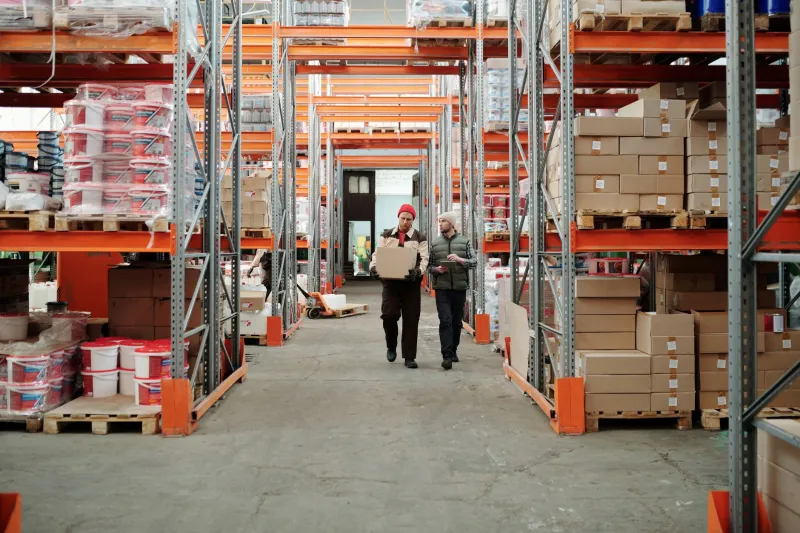
Ask for the address. Not the city — the street address. Ask which district, and what is across the road. Ask for a photo of the loading dock with the sign visible. A factory can do this without effort because the building exists. A reseller operating out of a shared fulfillment center will deflect, or send a stock photo of a warehouse that reverse-searches to four other sellers.
You can cross-check a Chinese company registration number, an 18-digit code, in public business registries, and a real trading entity will hand it over. Evasiveness here is the loudest signal on this list.
The ten-minute checklist
- Scroll the storefront. Depth or breadth?
- Open four listings. Do the photos look like they came from one camera?
- Reverse image search one photo.
- Ask one specific technical question.
- Request the certification document and verify the ID yourself.
- Ask for a street address and the company registration number.
- Compare the item's price across their own listings for duplicates.
Seven steps, ten minutes, zero dollars. It will not tell you whether the product is good — that is a separate question about the item, not the seller. But it will tell you who you are actually buying from, and whether the word factory in the store name means anything at all.
What a real one looks like
Worth saying plainly: genuine Zhejiang manufacturers do exist, plenty of them, and they are often the best value in this category. They tend to be narrow, boring, and slow to reply. Their storefront sells four things, all variations of the same thing. Their photos are consistent and slightly ugly. Their answers contain numbers. Their certificates name them.
That is a much less exciting storefront than the one shouting FACTORY DIRECT in red text. It is also the one that will still answer your email about a replacement part in eighteen months, which is the only kind of factory direct that ever mattered.