Small Apartment, Real Upgrades: Scoring Five Zhejiang Finds Against the 400-Square-Foot Test
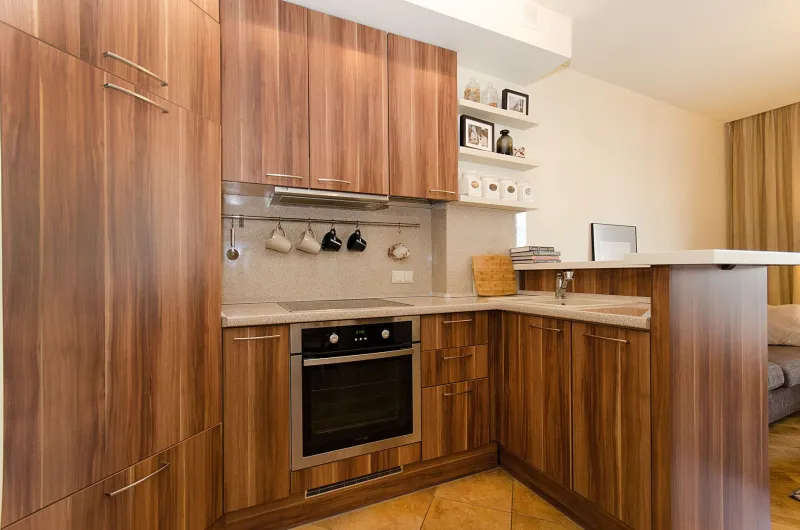
Four hundred square feet is about the size of a two-car garage. People live in that. They cook, host, work from home, and store a winter coat in it. So when a new gadget arrives, the honest question is not whether it is good. It is whether it is better than the empty space it replaces.
That framing kills a lot of purchases, which is exactly the point. Zhejiang produces an enormous share of the small, clever, inexpensive household goods that fill American apartments — folding storage, mini choppers, clip lights, handheld vacuums, desk trays. Most of them are fine. A few are genuinely transformative in a tight floor plan. The trick is telling those apart before the box shows up at your door.
Five axes, and why the spec sheet buries all of them
Product pages love to talk about capacity in liters and motors in watts. Those numbers rarely decide whether you keep a thing. These five do.
Footprint. Measured in square inches of floor or counter, and — crucially — in square inches when stowed. A unit that folds to the width of a cutting board is a different animal from one that only shrinks by 30 percent.
Setup time. How long from box to usable, and how long to put away again. Anything that takes more than three minutes to deploy will live on your counter permanently, whether or not you want it to.
Noise. In a studio, there is no door to close. A device that runs at 78 dB is a device you will avoid using after 9 p.m. and resent by Thanksgiving.
Power draw. Small apartments often have one sad kitchen circuit. A 1,500-watt appliance and a microwave on the same breaker is a recipe for a dark kitchen and a reset hunt.
Replacement math. How many single-purpose items does this retire? Something that replaces a colander, a salad spinner, and a strainer is doing three jobs' worth of rent.
1. Collapsible storage: the category that usually wins
This is the strongest case on the list. Zhejiang factories have gotten very good at fold-flat bins, soft-sided organizers, and nesting baskets, and the physics are honest: a bin that compresses to two inches deep genuinely reclaims closet volume.
Score it honestly, though. Cheap folding bins sometimes arrive with a chemical smell that takes a week of airing out, and the seams on sub-$20 units are where failure happens. Look for stitched reinforcement at the corners, not just glued edges, and check the stated load rating against what you actually plan to put in it. Footprint when stowed: excellent. Setup: seconds. Noise: none. Power: none. Replacement math: modest — it organizes rather than replaces.
Verdict: buy, but buy fewer than you think. Four good bins beat twelve flimsy ones, and twelve flimsy ones is how a studio ends up feeling smaller than before.
2. Compact kitchen tools: pick two, not five
Every small-kitchen regret I have ever had came from buying the whole set. A pull-chop, a spiralizer, a mini food processor, an egg cooker, a sandwich press — each one is reasonable alone, and together they own your only counter.
Apply the replacement test hard here. A single well-chosen 3-cup processor with a decent blade can retire a blender, a chopper, and a mortar for most weeknight cooking. A dedicated avocado slicer retires nothing, because a knife already does that job.
One practical note for U.S. buyers: check the voltage and plug before you fall in love with a listing. You want 120V, 60Hz, and a NEMA 1-15 or 5-15 plug. Anything advertising 220V is not meant for your outlet, no matter what the shipping page says. And on anything with a heating element or a motor that runs unattended, look for a UL or ETL mark on the unit itself — not just a claim in the listing copy.
Verdict: buy one, skip the set.
3. Clip-on lighting: the renter's workaround for no ceiling fixture
If you cannot drill, clamp lights are the answer, and Zhejiang makes an ocean of them. The differentiators are boring but decisive: clamp jaw width, whether the arm holds its position after a month, and whether the light is actually dimmable at the low end rather than just claiming to be.
Noise matters more than you would expect. Cheap units often use a buzzing driver that is inaudible in a store and maddening at 11 p.m. while you read. Power draw is trivial — most run under 12 watts — but cord length is where these products quietly fail. A five-foot cord on a clip light is a design insult in a room with two outlets.
Verdict: buy, with a cord-length check and a return window you trust.
4. Cleaning gadgets: this is where noise decides everything
Handheld vacuums, electric spin scrubbers, steam mops, cordless sweepers. In a small apartment, cleaning tools are the highest-stakes category because they have to be pleasant enough to grab on a Tuesday. A tool that is loud, heavy, and awkward gets used twice and then hides behind the coats.
Score the noise first. Under 70 dB is livable in a studio; over 80 dB and you will only use it when nobody is home, which in a studio means never. Then check battery reality: advertised runtime is almost always measured on the lowest setting, and a 20-minute claim often means 8 minutes of actual useful suction.
Verdict: buy, but only one, and only if it replaces a broom you hate.
5. Desk organizers: the anti-purchase
A desk organizer is a container for decisions you have not made. Most of them add footprint and retire nothing. The exceptions are the ones that solve a real problem — a monitor riser with storage underneath, a cable tray that gets wires off the floor — because those change the geometry of the room rather than tidying the surface.
Verdict: skip, unless it reclaims vertical space.
The rubric: score it out of 25 before you check out
Give each candidate 1 to 5 points on footprint when stowed, setup and teardown time, noise at the volume you will actually use it, power draw and circuit friendliness, and replacement math.
- 18 to 25: buy it. This thing is earning its rent.
- 13 to 17: buy only if it fills a gap you can name out loud, not one you imagine.
- Under 13: skip. The space is worth more than the gadget.
Then apply the tiebreak: one in, one out. If you cannot name the item this replaces, physically, in your apartment, you are not buying a tool. You are buying square footage for a box.
That single rule has saved me more money than any review I have ever read, and it costs nothing to run.