After the Confetti: Reading Zhejiang Price Tags Once Singles' Day Is Over

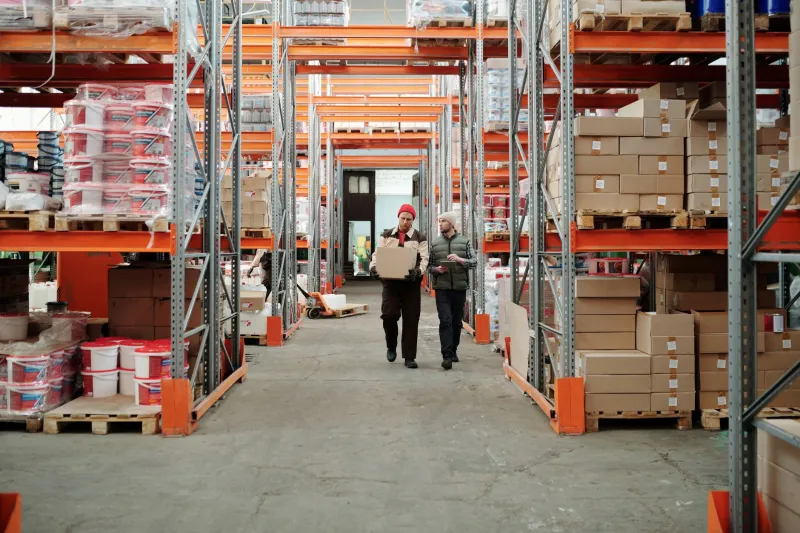
Photo by Photo by NSYS Group on Unsplash on Unsplash
It's November 13. The 11.11 fireworks on the Chinese shopping calendar went off two days ago, and yet the little red countdown clock on that Zhejiang-made air fryer listing is still ticking down to zero for the fourth time this week. If you've been poking around U.S.-facing storefronts and wondering whether you missed the boat or whether the boat never actually left the dock, welcome. Let's sort this out.
First, what 11.11 actually is from the seller's side
Singles' Day started as a campus joke in the 1990s and turned into the largest single shopping event on earth. For factories and trading companies in Zhejiang — the province behind an enormous share of the small appliances, kitchen gadgets, textiles and accessories that land in American homes — it's less a holiday and more a quarterly earnings event with a marketing budget.
That matters for you because the discount you see on a U.S.-facing listing is often a downstream echo of a promotion that was designed for domestic Chinese buyers, in yuan, on a different platform, with different shipping economics. By the time it reaches a storefront priced in dollars and shipped from a U.S. warehouse or a bonded facility, it has been translated — sometimes literally, sometimes financially.
The two prices hiding in mid-November
Once the sale banners come down, listings tend to split into two camps.
The reset price. A seller ran a genuine promotion, sold through a chunk of inventory, and now returns to the pre-sale number. If you check a price tracker and see a flat line for months, a spike down for a week, then a return to the flat line — that's a real event. Nothing shady. You just missed it.
The new baseline. A seller used 11.11 to test a lower price point and found that volume held up. Rather than climb back, they leave the listing a few percent below the old number and quietly let it ride. These are the markdowns that actually benefit a mid-November shopper, and they're rarely labeled as anything. No banner, no badge — just a slightly better number than the one you'd have paid in October.
There's a third, less charming camp: the listing that "discounted" from a reference price it never actually charged. We'll get to that.
Which discounts tend to survive the trip to a U.S. storefront
A few patterns hold up reasonably well when you're shopping Zhejiang-sourced goods in the days after the sale:
- Category-wide price shifts stick more than one-off deals. If five different sellers of bamboo cutting boards all moved down a couple of dollars at the same time, that's usually a supply-side change — a cheaper container rate, a glut of inventory, a factory clearing a fabric run. Those don't snap back on a marketing schedule.
- Slow movers keep their discount longest. The item that got four reviews in eighteen months isn't going back to full price in a hurry. If you genuinely want it, the post-sale window is friendly.
- Fast movers snap back fast. Anything with a queue of back-in-stock requests will be at or above its old price by Thanksgiving. This is where waiting costs you.
- Bundles and "gift sets" linger. Sellers would rather move a three-piece set at a modest margin than sit on the inventory. Expect the multi-pack version to hold its post-sale price longer than the single unit.
- Shipping thresholds are the quieter discount. A seller who dropped a free-shipping threshold from $49 to $35 during the sale often leaves it there through December. That's worth more than a 6% sticker cut on a $12 item.
The fake scarcity tells worth ignoring
Post-sale week is peak theater season. A short field guide:
The countdown that resets. Reload the page in an incognito window. If the timer restarts at a fresh twenty-four hours, it's a JavaScript decoration, not an inventory signal.
"Only 3 left" on a listing that's been at three left for nine days. Real stock counts drop. Screenshots don't.
The crossed-out price with no history. Take the "was" number and run it through a price tracker. If the listing has never actually sold at that figure, the discount is arithmetic, not generosity.
"11.11 pricing extended — final hours" arriving on November 20. It's not a deadline, it's a headline. Sellers repeat it because it works, and the honest ones repeat it too.
Urgency on a made-to-order item. If the product page says production takes two to three weeks, the clock is set dressing. Nobody is racing you to a warehouse that hasn't been built yet.
A five-minute check before you hit buy
This is the part that pays for itself. Open the listing, then open a price-history tab for the same product. You're looking for one thing: whether the current number is below the thirty-day median. If it is, and you actually need the item, buy it — post-sale prices on Zhejiang goods tend to drift back up as sellers rebuild margin ahead of the December rush.
If the current price is at or above the median, close the tab and set a reminder for the first week of December. There's usually a second, smaller dip when sellers clear whatever didn't move during the sale.
Two more quick checks: read the return window in the listing body, not the badge at the top, and confirm whether the item ships from a U.S. location or from overseas. A three-week transit time changes the math on a $22 purchase in a way a 10% discount never will.
What to do with all this
The honest summary is that Singles' Day is a real event with real discounts, wrapped in a thick layer of marketing that outlives the event by weeks. The price you see on November 13 isn't automatically worse than the one you saw on November 10 — sometimes it's better, because a seller found a new floor and decided to stay there.
So skip the countdown clock. Skip the "last chance" banner that will still be up at Thanksgiving. Look at the thirty-day line, check the return terms, and ask whether the shipping timeline fits your life. That's the whole trick. The rest is confetti.