The Same Box, Twice: How to Trace Two Zhejiang Listings Back to One Seller

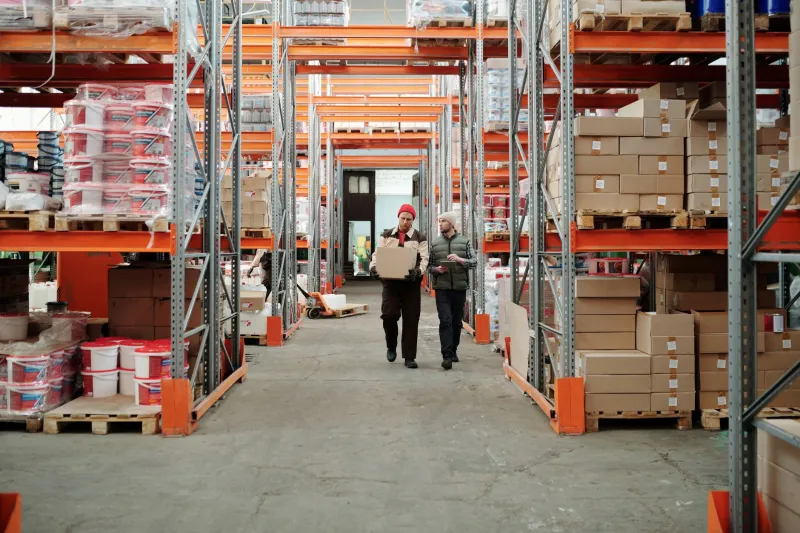
Photo: warehouse shelves cardboard boxes ecommerce fulfillment center, via www.hilldrup.com
You are comparing two listings for what looks like the same stainless-steel kitchen scale. One is $24.99. The other is $31.50. It is tempting to read that gap as two sellers fighting for your business. Sometimes it is. Often, it is one operation wearing two name tags.
That matters because price comparison only works when you know how many actual sellers are behind the listings. On large U.S. marketplaces, Zhejiang-made goods frequently get listed through multiple storefronts: sister shops, cloned catalogs, and test-price accounts. None of that is automatically a scam. But it does change what a price gap means. Here is how to trace the paper trail before you assume you are watching a fair fight.
A price gap can be theater
A seller may run several storefronts to capture more search real estate, test $25 versus $32, or split inventory risk. When two listings share a warehouse, a return address, and a photo set, the cheaper price is not a discount from a competitor. It is the same business pricing against itself.
Read the storefront name like a family tree
Start with the 'Sold by' line, then open the seller profile. Look for family names: HomeNest, HomeNest US, HomeNest Official, HomeNest Direct. Not proof, but a pattern. Check the business name, address, year joined, and feedback count. A storefront that joined three months ago with 2,000 ratings on one item deserves a second look.
Follow the paper trail
The return address is one of the hardest details to fake at scale. If two listings send returns to the same warehouse — whether in Zhejiang or a U.S. fulfillment hub — that is a strong signal. Also check the importer or distributor line on the packaging or listing. Marketplace seller pages sometimes list a business license or registered agent. Same entity, different display name, is common.
Photos are fingerprints, not proof
Identical hero images, identical infographics, even identical typos in the image text are clues. Reverse-image search the main photo. Look at the order of images and the background props. But be fair: many sellers use the same manufacturer stock photos. Matching photos alone does not prove one seller. Matching photos plus matching odd crops plus matching bundle names does.
Review timing tells a story
Reviews are noisy, but timestamps are not. If two storefronts collect a burst of reviews in the same week, with similar phrasing and similar reviewer profiles, that is worth noticing. A new storefront with 40 reviews inside five days is not organically building trust. Check whether the same reviewer appears across both listings.
Compare catalogs, not just products
Open the full storefront. Are the same 30 SKUs in the same order? Same coupon language? Same bundle names like 'Kitchen Starter Set A'? High overlap suggests one operator. Low overlap suggests independent sellers. A shared catalog is common; a shared catalog with shared naming quirks is a signature.
The return policy is a signature
Return windows, restocking fees, and policy wording get copied less often than photos. Two listings with the same 45-day window and the same odd sentence about 'original packaging condition' are probably related. Read the policy on both listings side by side.
What to do with the answer
If you find one seller behind both listings, treat the price gap as an internal pricing experiment. Buy the cheaper one if shipping and returns are equal, but do not congratulate yourself on beating a competitor. If you find two genuinely separate sellers, compare feedback for the specific item, not just the store rating. And if the paper trail is muddy, buy from the storefront with the clearer return address and policy.
A five-minute checklist
- Open both seller profiles and compare business name, address, and join date.
- Check the return address on each listing.
- Reverse-image search the main product photo.
- Compare review dates for burst patterns.
- Scan the storefront for catalog overlap and identical bundle names.
- Read both return policies side by side.
- Buy the cheaper listing only after the first six checks.
The goal is not to hunt for conspiracies. It is to know whether you are comparing two sellers or one seller's two price tags. That distinction is the difference between a deal and a magic trick.